Seasickness affects roughly one in three people to some degree during ocean travel, yet most crossings proceed without widespread suffering. Understanding the physiological conflict between what your eyes see and what your inner ear senses — the root of motion sickness — empowers practical prevention. This guide summarizes evidence-based strategies for comfortable ferry and cruise travel.
Why motion sickness happens at sea
Your vestibular system detects movement; your eyes, when focused on a stationary cabin interior, report stillness. This sensory mismatch triggers nausea as the brain misinterprets conflicting signals — possibly as poisoning, evolutionary theory suggests. Open water amplifies the conflict because low-frequency rolling and pitching exceed what land-based experience prepares you for. Susceptibility varies genetically; those prone to car sickness or migraines often face higher risk at sea.
Cabin location and ship position
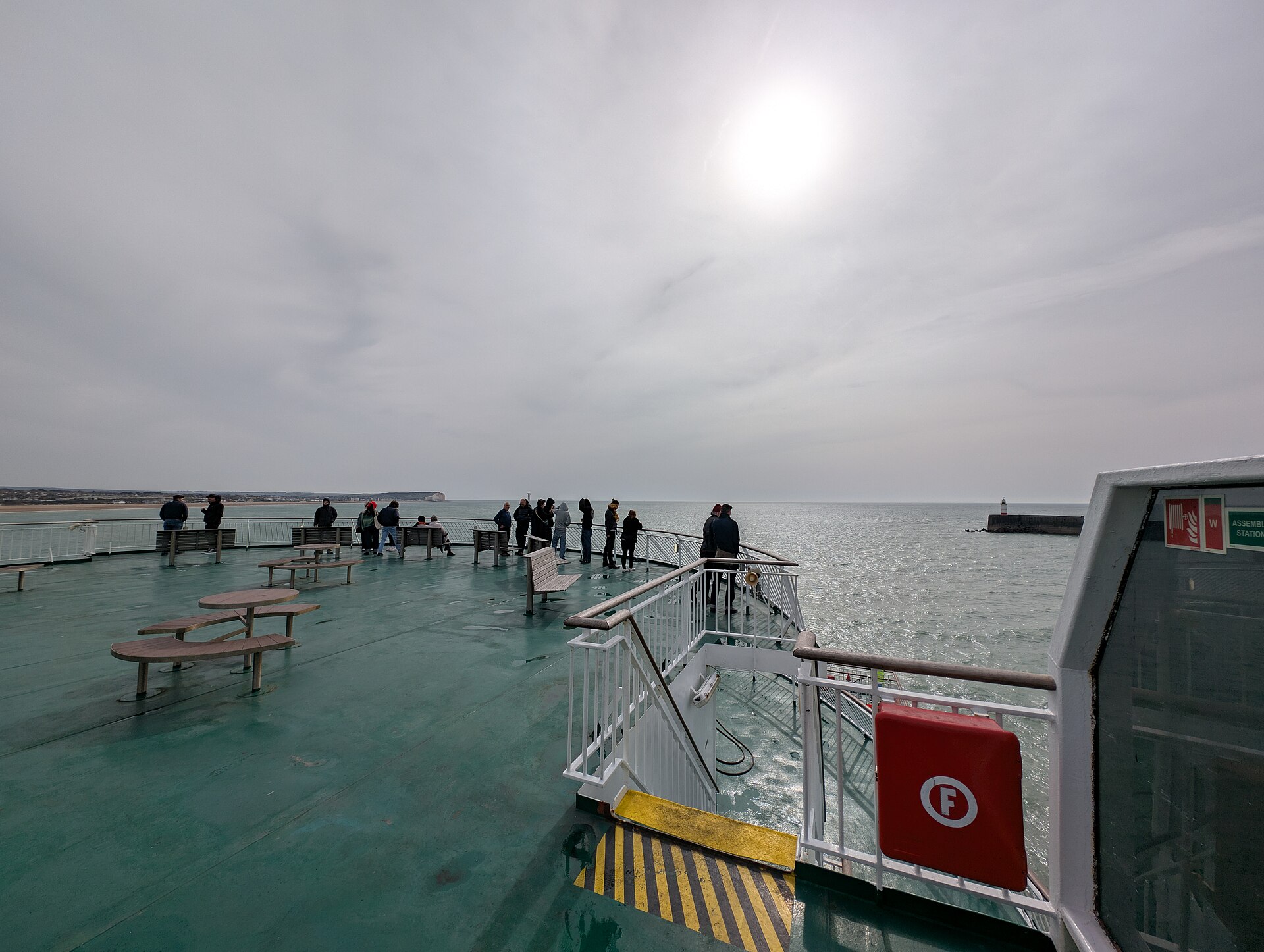
Motion is least pronounced at the ship's center of gravity — mid-ship and lower decks. Bow and stern extremes move through wider arcs; upper decks amplify roll sensation. If you know you are susceptible, request mid-ship cabins when booking. During rough weather, lying horizontally with eyes closed reduces sensory conflict. Fresh air on stable outdoor decks, fixing gaze on the horizon, helps recalibrate the vestibular-visual connection.
Dietary choices before and during sailing
Heavy, greasy, or acidic meals before departure worsen symptoms. Light, bland food — crackers, bread, bananas — settles the stomach without overloading digestion. Alcohol dehydrates and intensifies nausea; moderation or abstinence on the first night reduces risk. Ginger, consumed as tea, capsules, or crystallized candy, shows modest evidence for nausea reduction in clinical studies, though effects vary individually.
Scopolamine patches and antihistamines like dimenhydrinate work best when taken before symptoms appear — ideally one hour before departure. Once nausea develops, recovery takes longer.
Pharmaceutical and alternative remedies
Over-the-counter antihistamines — dimenhydrinate, meclizine — block signals to the vomiting center in the brain. Drowsiness is the primary side effect; non-drowsy formulations exist with varying effectiveness. Prescription scopolamine patches deliver medication through skin over three days, popular among cruise regulars. Acupressure wristbands target the P6 point; clinical evidence is mixed but harm is negligible, making them reasonable adjuncts.
Avoid reading or screen focus during active motion — the eyes-fixed-on-still-text pattern worsens conflict. Audiobooks and podcasts provide entertainment without visual strain. If symptoms escalate, crew members are trained to assist; ship medical centers stock injectable anti-nausea medication for severe cases.
Adaptation over multi-day voyages
Many passengers acclimate within forty-eight hours as the brain recalibrates to ship motion — the "sea legs" phenomenon. Short ferry crossings may end before adaptation completes, making prevention more important than on week-long cruises. Returning to land sometimes produces brief "mal de débarquement" — sensation of rocking while walking on stable ground — which typically resolves within days. With preparation and realistic expectations, seasickness rarely ruins an otherwise rewarding ocean journey.